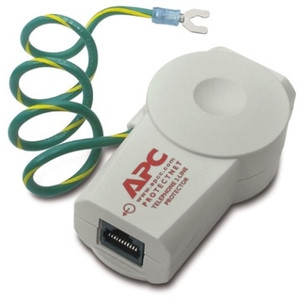
APC® ProtectNet Analog/DSL Phone Line Surge Suppressor, Beige
Part #: APWPTEL2
MPN: APW PTEL2
UNSPSC: 39121610
General InformationManufacturer:Schneider Electric SA Manufacturer Part Number:PTEL2 Manufacturer Website Address:http://www.schneider-electric.com Brand Name:APC by Schneider Electric Product Line:ProtectNet Product Name:ProtectNet Analog Telephone Line Surge Suppressor Marketing Information:Data line surges make up an overwhelming majority of all surge induced damages where the equipment was thought to be already protected but had a back door such as a modem line unprotected. Network interface cards, in particular, can be destroyed by relatively mild spikes. According to Ethernet standards (IEEE 802.3), non-AC network electrical hazards include: Direct contact between components and power or lightning circuits, static charge buildup on cables and component, high-energy transients coupled onto the local cabling system (those induced by other cables which are installed in the general proximity of network cables or lightning within a mile radius) and potential differences (even from building to building, between safety grounds to which components are connected.) Packaged Quantity:1 Each Product Type:Surge Suppressor/Protector
Physical CharacteristicsProduct Color:Beige Height:4.1" Width:1.9" Depth:1.1" Weight (Approximate):2.24 oz
MiscellaneousPackage Contents:
ProtectNet Analog Telephone Line Surge Suppressor
User manual
Additional Information:
Catastrophic Event Protection
Standard Warranty: 10 Year Repair/Replace
System Requirements:
Use only for analog modems, fax machines and other telecommunication devices
The PTEL2 must be connected to earth ground
Certifications & Standards:
CSA
UL 497A
UL Listed
Environmentally Friendly:Yes Country of Origin:Costa Rica
WarrantyLimited Warranty:10 Year
Non-Refundable/Non-Returnable
Network interface cards, in particular, can be destroyed by relatively mild spikes
According to Ethernet standards (IEEE 802.3), non-AC network electrical hazards include: Direct contact between components and power or lightning circuits, static charge buildup on cables and component, high-energy transients coupled onto the local cabling system (those induced by other cables which are installed in the general proximity of network cables or lightning within a mile radius) and potential differences (even from building to building, between safety grounds to which components are connected.)